

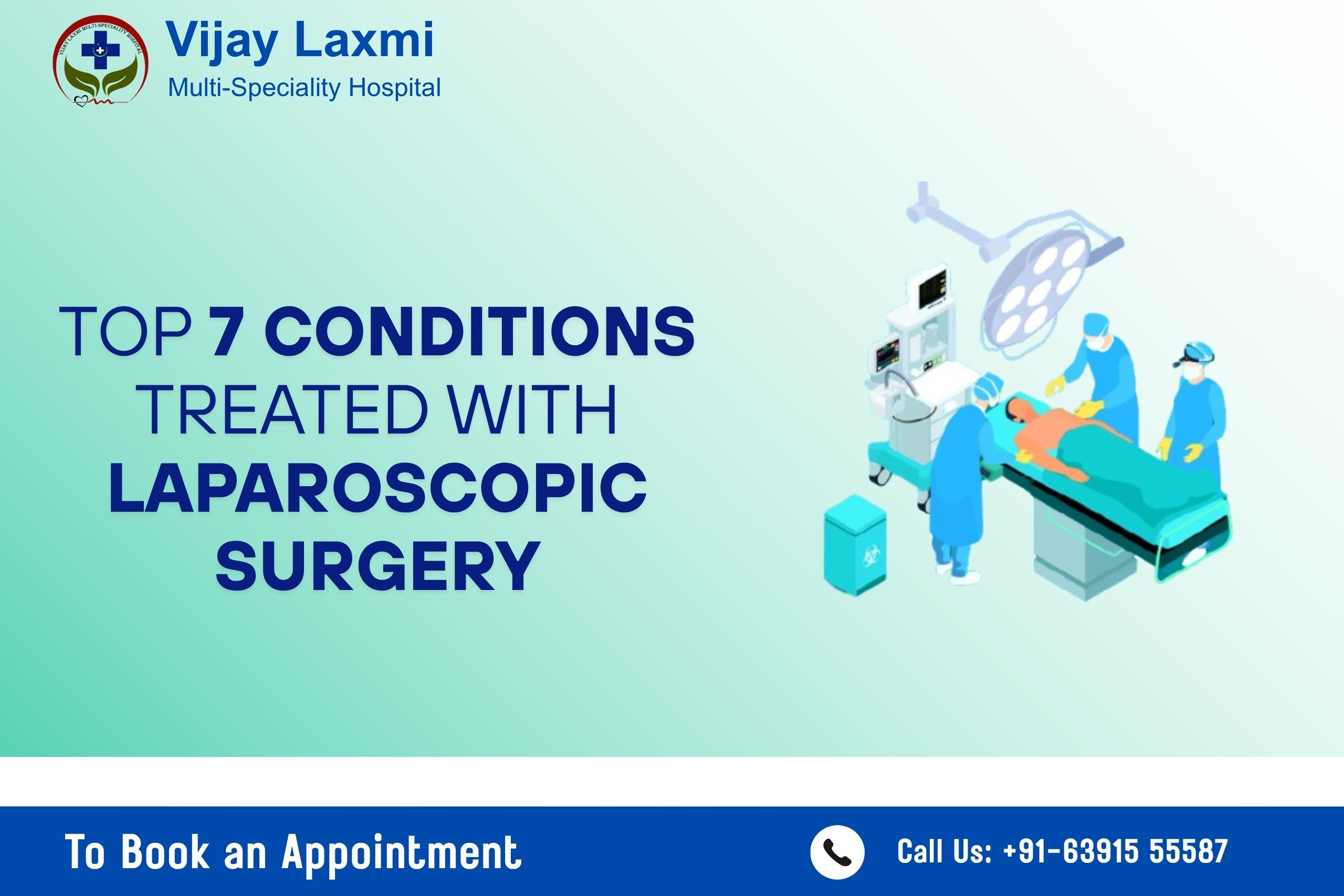
Top 7 Conditions That Can Be Treated with Laparoscopic Surgery
Medical technology has significantly improved the way surgeries are performed today. One of the most remarkable advancements in modern surgery is laparoscopic surgery, also known as minimally invasive surgery. Instead of large incisions used in traditional open surgery, laparoscopic procedures use small cuts and specialized instruments to treat various medical conditions with precision and minimal trauma.
For patients, this means less pain, quicker recovery, smaller scars, and shorter hospital stays. Because of these advantages, laparoscopic techniques are now widely used to treat many abdominal and pelvic conditions.
Many patients visiting Vijay Laxmi Multi-Speciality Hospital, Jaunpur, often ask an important question: What are the most common conditions treated with laparoscopic surgery?
Under the expertise of Dr. Vishad Patel, an experienced laparoscopic surgeon, several conditions can now be managed safely through minimally invasive procedures. In this blog, we will explore the top 7 conditions treated with laparoscopic surgery, how these procedures work, and why they are becoming the preferred surgical option for many patients.
Understanding Laparoscopic Surgery
Before discussing the specific diseases, it’s important to understand how laparoscopic surgery works.
During laparoscopic surgery, a surgeon makes small incisions in the abdomen, usually 0.5–1 cm in size. A thin tube with a camera called a laparoscope is inserted through one incision. This camera sends magnified images of internal organs to a monitor, allowing the surgeon to perform the procedure with high precision.
Other surgical instruments are inserted through additional small incisions to complete the surgery.
Key Benefits of Laparoscopic Surgery
Compared to open surgery, laparoscopic procedures offer:
- Smaller surgical scars
- Reduced blood loss
- Less post-operative pain
- Lower risk of infection
- Faster recovery
- Shorter hospital stay
- Earlier return to daily activities
Because of these advantages, many conditions treated with laparoscopic surgery can now be managed safely and effectively.
Top 7 Conditions Treated with Laparoscopic Surgery
Let’s take a closer look at the most common medical conditions treated with laparoscopic surgery.
1. Gallbladder Stones (Gallstones)
Gallbladder stones are one of the most common conditions treated with laparoscopic surgery worldwide.
What Are Gallstones?
Gallstones are hardened deposits of digestive fluid that form in the gallbladder. They can cause symptoms such as:
- Severe abdominal pain (especially after meals)
- Nausea and vomiting
- Indigestion and bloating
- Pain radiating to the back or shoulder
If gallstones block the bile duct, they can cause inflammation or infection.
Treatment
The standard treatment is laparoscopic cholecystectomy, a procedure that removes the gallbladder through small incisions. Most patients can go home within 24 hours and resume normal activities within a few days.
At Vijay Laxmi Multi-Speciality Hospital, Dr. Vishad Patel performs laparoscopic gallbladder surgery with a focus on patient safety and faster recovery.
2. Appendicitis (Appendix Inflammation)
Another common condition among the conditions treated with laparoscopic surgery is appendicitis.
What Is Appendicitis?
Appendicitis occurs when the appendix becomes inflamed or infected. Symptoms include:
- Severe abdominal pain (usually on the lower right side)
- Fever
- Nausea or vomiting
- Loss of appetite
Appendicitis is considered a medical emergency because a ruptured appendix can lead to serious infection.
Treatment
The recommended treatment is laparoscopic appendectomy, where the inflamed appendix is removed through minimally invasive surgery. This method allows patients to recover faster compared to traditional open surgery.
3. Hernia Repair
Hernia is another major condition commonly managed through laparoscopy.
What Is a Hernia?
A hernia occurs when an internal organ pushes through a weak area in the surrounding muscle or tissue wall. Common types include:
- Inguinal hernia
- Umbilical hernia
- Incisional hernia
- Femoral hernia
Symptoms may include swelling, pain, or discomfort, especially while lifting heavy objects.
Treatment
Hernias can be repaired using laparoscopic hernia surgery, where the surgeon strengthens the weak area with mesh support. This approach results in:
- Smaller incisions
- Less pain after surgery
- Faster return to normal activities
Hernia repair is one of the frequently performed conditions treated with laparoscopic surgery.
4. Ovarian Cysts
Laparoscopic surgery is also widely used in gynecology.
What Are Ovarian Cysts?
Ovarian cysts are fluid-filled sacs that develop on the ovaries. While many cysts are harmless, some can cause symptoms such as:
- Pelvic pain
- Irregular periods
- Bloating
- Pain during intercourse
Large or persistent cysts may require surgical removal.
Treatment
Through laparoscopic cystectomy, surgeons can remove ovarian cysts while preserving healthy ovarian tissue. This minimally invasive approach helps reduce pain and promotes quicker healing.
5. Endometriosis
Endometriosis is another important condition among the conditions treated with laparoscopic surgery.
What Is Endometriosis?
Endometriosis occurs when tissue similar to the uterine lining grows outside the uterus, causing symptoms like:
- Severe pelvic pain
- Painful periods
- Infertility
- Chronic abdominal discomfort
Treatment
Laparoscopy allows surgeons to diagnose and treat endometriosis simultaneously by removing abnormal tissue and adhesions. This helps relieve symptoms and improve reproductive health in many patients.
6. Diagnostic Laparoscopy for Unexplained Abdominal Pain
Sometimes patients experience persistent abdominal pain without a clear diagnosis through imaging tests.
In such cases, doctors may recommend diagnostic laparoscopy.
Purpose of Diagnostic Laparoscopy
This procedure helps doctors examine the abdominal organs directly and identify conditions such as:
- Internal infections
- Abdominal adhesions
- Early-stage tumors
- Pelvic inflammatory disease
Because it requires only small incisions, diagnostic laparoscopy is considered a safe and effective method among the conditions treated with laparoscopic surgery.
7. Certain Gynecological Surgeries
Laparoscopic surgery is commonly used for several gynecological procedures, including:
- Removal of fibroids
- Treatment of ectopic pregnancy
- Hysterectomy (uterus removal)
- Pelvic adhesions
These procedures benefit greatly from the precision of laparoscopic techniques, leading to faster recovery and minimal scarring.
Why Patients Prefer Laparoscopic Surgery
Many patients choose laparoscopic surgery because of its advantages over traditional open surgery.
Key Reasons Include
- Less surgical trauma
- Reduced hospital stay
- Faster recovery time
- Lower risk of infection
- Minimal scarring
- Quicker return to work and normal life
For these reasons, the number of conditions treated with laparoscopic surgery continues to expand as medical technology advances.
Expertise of Dr. Vishad Patel
When it comes to laparoscopic procedures, the skill and experience of the surgeon play a crucial role.
Dr. Vishad Patel, laparoscopic surgeon at Vijay Laxmi Multi-Speciality Hospital, specializes in minimally invasive surgical techniques and focuses on providing safe and effective treatment for patients.
His approach includes:
- Thorough diagnosis and patient evaluation
- Choosing the safest surgical method
- Minimizing tissue damage
- Reducing post-operative pain
- Ensuring smooth and monitored recovery
Patients from Jaunpur and nearby areas trust his expertise for the safe management of various conditions treated with laparoscopic surgery.
When Should You Consult a Surgeon?
Many people delay medical consultation when they experience symptoms such as abdominal pain or digestive discomfort. However, early diagnosis can prevent complications and allow treatment through minimally invasive methods.
You should consult a surgeon if you experience:
- Persistent abdominal pain
- Severe indigestion or bloating
- Unexplained pelvic pain
- Sudden swelling or bulge in the abdomen
- Symptoms of appendicitis or gallstones
Timely consultation increases the chances of treating these conditions treated with laparoscopic surgery with minimal complications.
Conclusion
Laparoscopic surgery has transformed modern surgical care by offering patients a safer, less invasive alternative to traditional open surgery. From gallstones and appendicitis to hernias and gynecological conditions, many diseases can now be treated effectively using minimally invasive techniques.
Understanding the conditions treated with laparoscopic surgery helps patients make informed decisions about their healthcare and seek timely treatment.
At Vijay Laxmi Multi-Speciality Hospital, Jaunpur, Dr. Vishad Patel provides advanced laparoscopic surgical care with a focus on safety, precision, and faster recovery.
If you or a family member is experiencing symptoms related to any of the conditions discussed above, consulting a qualified surgeon can help you receive the right treatment at the right time.
Call Us: 063915 55587
Visit Us: Laxmi Complex, Jaycees Chauraha, Azamgarh Rd, Pratap Colony, Jaunpur, Uttar Pradesh 222002
Disclaimer:
The information provided in this article is for educational and informational purposes only and is not a substitute for professional medical advice, diagnosis, or treatment. Always consult a qualified healthcare provider