

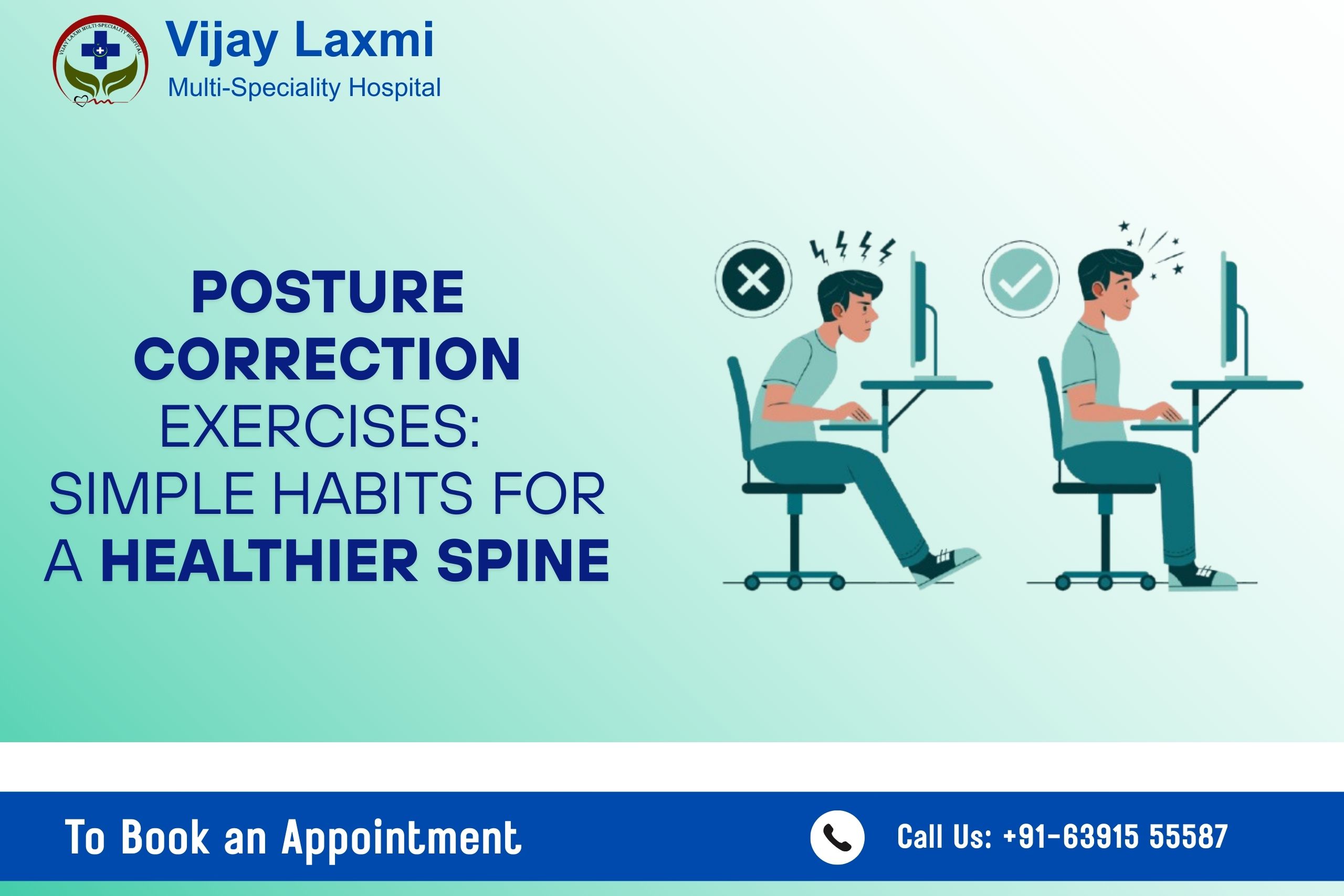
Posture Correction: Simple Habits for a Healthier Spine
In today’s fast-paced lifestyle, poor posture has quietly become one of the most common causes of back pain, neck stiffness, shoulder discomfort, and early spine degeneration. Long hours at desks, excessive mobile phone use, improper sitting habits, and lack of physical activity are taking a toll on spinal health—across all age groups.
According to Dr. Ayush Patel, orthopedic specialist at Vijay Laxmi Multi-Speciality Hospital, posture-related problems are now being seen not only in elderly patients but also in young adults, office workers, students, and even teenagers. The good news is that most posture-related spine issues are preventable and reversible with timely intervention, awareness, and the right posture correction exercises.
At Vijay Laxmi Multi-Speciality Hospital, patients from Jaunpur and nearby areas seek expert guidance for posture-related pain, stiffness, and mobility issues. This blog explains why posture matters, how poor posture affects your spine, and how simple daily habits and exercises can help you maintain a healthier, pain-free spine.
Why Posture Matters for Spine Health
Your spine is designed to maintain natural curves in the neck, upper back, and lower back. Correct posture helps distribute body weight evenly, reduces stress on joints and muscles, and supports smooth movement.
Poor posture, on the other hand, leads to:
- Muscle imbalance
- Increased pressure on spinal discs
- Reduced flexibility
- Chronic pain in the neck, back, and shoulders
- Early degenerative spine conditions
Dr. Ayush Patel explains that many patients ignore posture-related discomfort until it becomes severe. Early correction through guided posture correction exercises can prevent long-term orthopedic problems.
Common Causes of Poor Posture
Poor posture doesn’t happen overnight. It develops gradually due to everyday habits such as:
1. Prolonged Sitting
Office work, studying, or driving for long hours without breaks weakens core muscles and strains the spine.
2. Mobile Phone and Laptop Use
Looking down at screens for extended periods leads to “text neck” and rounded shoulders.
3. Improper Sleeping Position
Using the wrong pillow or mattress can affect spinal alignment.
4. Weak Core and Back Muscles
Lack of physical activity reduces muscle support for the spine.
5. Carrying Heavy Bags Incorrectly
Uneven weight distribution causes spinal imbalance, especially in students.
Patients from areas like Shahganj, Mungra Badshahpur, Kerakat, and Mariahu often visit Vijay Laxmi Multi-Speciality Hospital with posture-related complaints linked to these daily habits.
How Poor Posture Affects the Spine Over Time
If left uncorrected, poor posture can lead to several orthopedic issues, including:
- Chronic neck and lower back pain
- Cervical and lumbar spondylosis
- Slipped disc
- Shoulder impingement
- Headaches and fatigue
- Reduced lung capacity
Dr. Ayush Patel emphasizes that posture-related spine stress builds slowly, making early diagnosis and preventive care essential.
Role of Posture Correction Exercises in Spine Health
One of the most effective ways to address posture-related issues is through regular posture correction exercises. These exercises focus on strengthening weak muscles, stretching tight areas, and restoring natural spinal alignment.
At Vijay Laxmi Multi-Speciality Hospital, posture correction programs are designed based on:
- Age
- Occupation
- Pain severity
- Existing spine conditions
- Lifestyle habits
This personalized approach ensures long-term improvement rather than temporary relief.
Simple Posture Correction Exercises for Daily Practice
Below are some commonly recommended exercises by orthopedic and physiotherapy experts. These should ideally be performed under professional guidance, especially if pain is present.
1. Chin Tucks
This exercise is highly effective for correcting forward head posture, a common problem caused by prolonged mobile and laptop use. It helps realign the neck and reduces strain on cervical spine muscles.
How to do it:
Sit upright with your shoulders relaxed. Gently pull your chin backward as if you’re trying to make a double chin, keeping your head level (do not tilt up or down). Hold for 5 seconds, then relax. Repeat 10 times.
Tip: You should feel a gentle stretch at the back of your neck, not pain.
2. Shoulder Blade Squeezes
Shoulder blade squeezes strengthen the upper back muscles that support proper posture and help prevent rounded shoulders.
How to do it:
Sit or stand straight. Slowly squeeze your shoulder blades together as if trying to hold a pencil between them. Keep your shoulders down (avoid shrugging). Hold for 5 seconds, then relax. Repeat 10–12 times.
3. Wall Posture Exercise
This exercise helps you become aware of your natural spinal alignment and trains your body to maintain correct posture throughout the day.
How to do it:
Stand with your back against a wall, ensuring your head, shoulders, and hips are touching the wall. Keep your chin slightly tucked and your lower back neutral (not overly arched). Hold this position for 30 seconds, breathing normally. Gradually increase hold time as posture improves.
4. Cat–Cow Stretch
The cat–cow stretch improves spinal flexibility, reduces stiffness, and relieves tension in the back and neck—especially helpful after long periods of sitting.
How to do it:
Get on all fours with hands under shoulders and knees under hips. Slowly arch your back upward (cat pose), then gently lower and curve your spine downward while lifting your head (cow pose). Move slowly and repeat 8–10 times.
5. Pelvic Tilts
Pelvic tilts strengthen the lower back and core muscles, which play a key role in maintaining proper posture while sitting and standing.
How to do it:
Lie on your back with knees bent and feet flat on the floor. Gently tighten your abdominal muscles and flatten your lower back against the floor. Hold for 5 seconds, then relax. Repeat 10–12 times.
6. Plank Hold
Planks build core strength, which is essential for supporting the spine and maintaining upright posture during daily activities.
How to do it:
Lie face down, then lift your body onto your forearms and toes, keeping your body in a straight line from head to heels. Hold for 20–30 seconds initially, gradually increasing duration as strength improves. Avoid sagging or arching your back.
7. Chest Stretch
This stretch helps counteract the effects of prolonged sitting, slouching, and forward-rounded shoulders by opening up the chest muscles.
How to do it:
Stand tall and clasp your hands behind your back. Gently lift your hands upward while keeping your shoulders relaxed and chest open. Hold for 15–20 seconds and repeat 2–3 times.
8. Neck Side Stretch
This exercise relieves neck and shoulder tension, which commonly develops due to poor posture and stress.
How to do it:
Sit upright and gently tilt your head toward one shoulder until you feel a stretch on the opposite side of the neck. Hold for 10–15 seconds, then switch sides. Repeat 2–3 times on each side.
Lifestyle Habits That Support Better Posture
Exercises alone are not enough. Dr. Ayush Patel advises combining posture correction with simple lifestyle changes:
Maintain Ergonomic Sitting
Keep feet flat on the floor, back straight, and screen at eye level.
Take Frequent Breaks
Stand, stretch, and move every 30–45 minutes.
Sleep with Proper Support
Use a supportive mattress and pillow that keeps the spine aligned.
Avoid Slouching While Using Mobile Phones
Raise the phone to eye level instead of bending the neck.
Strengthen Core Muscles
A strong core naturally supports correct posture.
Patients from Jaunpur city and nearby localities often report noticeable improvement within weeks of adopting these habits.
When to See an Orthopedic Doctor for Posture Problems
You should consult an orthopedic specialist if you experience:
- Persistent neck or back pain
- Stiffness that doesn’t improve with rest
- Tingling or numbness in arms or legs
- Pain radiating from spine to limbs
- Difficulty maintaining upright posture
At Vijay Laxmi Multi-Speciality Hospital, Dr. Ayush Patel evaluates posture-related issues through physical examination, imaging if required, and functional assessment. Treatment plans may include physiotherapy, guided exercises, pain management, and lifestyle correction.
How Dr. Ayush Patel Treats Posture-Related Spine Problems
Dr. Ayush Patel follows a comprehensive, non-surgical-first approach for posture-related spine issues:
- Detailed posture and gait assessment
- Identification of muscle imbalances
- Customized posture correction exercise plans
- Physiotherapy support
- Pain relief through medication or therapy if needed
- Long-term monitoring and prevention strategies
Patients from surrounding regions like Badlapur, Zafarabad, and Chandwak often seek treatment here due to the hospital’s integrated orthopedic and physiotherapy care.
Why Choose Vijay Laxmi Multi-Speciality Hospital for Spine and Posture Care
- Experienced orthopedic care under Dr. Ayush Patel
- Dedicated physiotherapy department
- Personalized rehabilitation programs
- Advanced diagnostic facilities
- Patient-centered, ethical treatment approach
- Trusted by patients across Jaunpur and nearby towns
The hospital focuses not just on treating pain but on correcting the root cause to prevent recurrence.
Frequently Asked Questions
1. Can poor posture really cause back pain?
Yes. Poor posture increases stress on spinal discs and muscles, leading to chronic pain over time.
2. How long do posture correction exercises take to show results?
Most people notice improvement within 2–4 weeks if exercises are done regularly.
3. Are posture correction exercises safe for everyone?
Generally yes, but people with existing spine conditions should consult an orthopedic doctor first.
4. Can posture correction prevent surgery?
In many cases, early posture correction and physiotherapy can prevent the need for surgery.
5. Do children and teenagers need posture correction?
Yes. Early correction helps prevent future spine problems, especially with increased screen use.
6. Is physiotherapy necessary for posture correction?
Physiotherapy ensures exercises are done correctly and safely, especially in painful conditions.
7. Can posture issues cause headaches?
Yes. Neck and upper back posture problems can trigger tension headaches.
8. When should I consult Dr. Ayush Patel?
If posture-related pain persists or affects daily life, early consultation is recommended.
Conclusion
Good posture is not just about appearance—it’s essential for a healthy spine and pain-free life. With modern lifestyles placing constant stress on the back and neck, posture correction has become more important than ever.
Through regular posture correction exercises, mindful daily habits, and expert medical guidance, most posture-related problems can be effectively managed and even reversed. At Vijay Laxmi Multi-Speciality Hospital, Dr. Ayush Patel and his team focus on long-term spine health, helping patients across Jaunpur and nearby areas regain comfort, mobility, and confidence.
If you’re experiencing back, neck, or shoulder discomfort, don’t ignore it. Early posture correction can make all the difference.
Call Us: 063915 55587
Visit Us: Laxmi Complex, Jaycees Chauraha, Azamgarh Rd, Pratap Colony, Jaunpur, Uttar Pradesh 222002
Disclaimer:
The information provided in this article is for educational and informational purposes only and is not a substitute for professional medical advice, diagnosis, or treatment. Always consult a qualified healthcare provider