

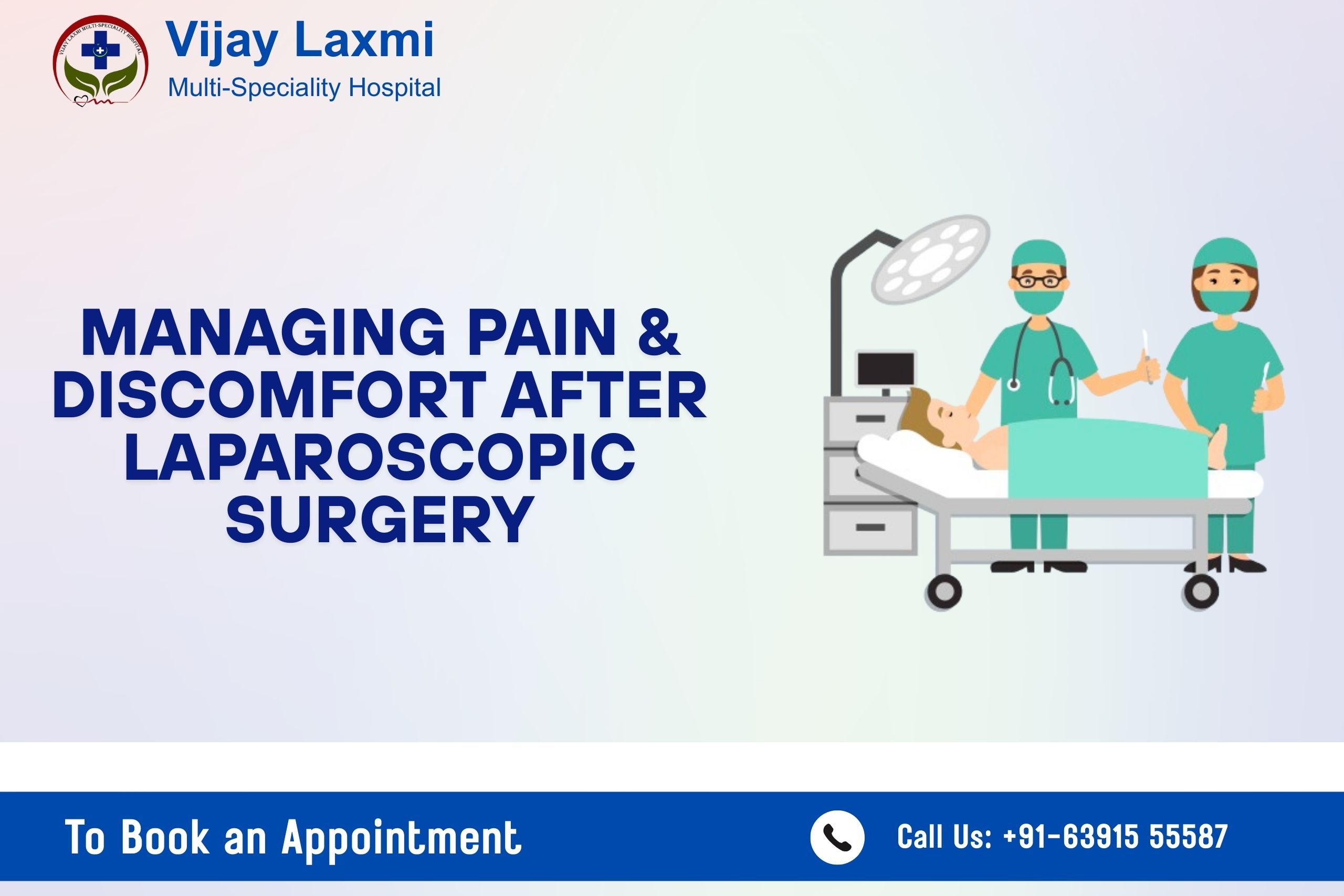
Managing Pain and Discomfort After Laparoscopic Surgery
Laparoscopic surgery has transformed modern healthcare by offering patients a safer, minimally invasive alternative to traditional open surgery. Smaller incisions, reduced blood loss, and faster recovery are some of its biggest advantages. However, despite being less invasive, many patients still experience pain and discomfort in the days following the procedure.
Understanding laparoscopic pain management is essential for a smooth and stress-free recovery. Patients often worry about how much pain is normal, how long it will last, and what they can do to feel better without slowing healing.
At Vijay Laxmi Multi-Speciality Hospital, Dr. Vishad Patel, an experienced laparoscopic surgeon, emphasizes that post-surgical pain is expected but it is manageable with the right medical guidance, lifestyle adjustments, and timely care.
This blog explains the causes of pain after laparoscopic surgery, effective pain control methods, home-care tips, warning signs, and expert advice to help you recover comfortably and confidently.
Why Pain Occurs After Laparoscopic Surgery
Although laparoscopic surgery involves small incisions, it still affects internal tissues and nerves. Pain after surgery is a natural response of the body during healing. The intensity and duration vary depending on the type of surgery, individual pain tolerance, and overall health.
Common causes of post-laparoscopic pain include:
- Incision pain: Mild to moderate soreness at the small cut sites
- Internal tissue healing: Organs manipulated during surgery need time to recover
- Gas-related discomfort: Carbon dioxide gas used during surgery can irritate the diaphragm
- Muscle strain: From surgical positioning or reduced activity
- Inflammation: A natural immune response to healing
With proper laparoscopic pain management, most patients experience steady improvement within a few days.
Types of Pain and Discomfort After Laparoscopic Surgery
1. Incisional Pain
This is the most common type of discomfort. Patients may feel tenderness, pulling, or mild burning around the incision sites. This usually improves within 3–7 days.
2. Shoulder or Upper Chest Pain
Many patients are surprised by shoulder pain after abdominal laparoscopy. This is caused by residual carbon dioxide gas irritating the diaphragm, which shares nerve pathways with the shoulder.
3. Abdominal Bloating and Cramping
Gas retention and slowed digestion after anesthesia can lead to bloating, tightness, or cramps.
4. Muscle and Back Pain
Reduced movement after surgery can cause stiffness, especially in the back and legs.
5. Fatigue-Related Discomfort
The body uses significant energy to heal, which can result in general soreness and tiredness.
How Long Does Pain Last After Laparoscopic Surgery?
For most patients:
- First 24–48 hours: Mild to moderate pain
- Day 3–5: Significant improvement
- By 1–2 weeks: Minimal or no pain
- By 3–4 weeks: Full comfort in most daily activities
Procedures like gallbladder surgery or hernia repair may cause discomfort for a slightly longer duration. According to Dr. Vishad Patel, patients who follow recovery guidelines strictly often report faster pain relief and fewer complications.
Natural and Home-Based Pain Relief Methods
Medical treatment works best when supported by simple lifestyle measures.
1. Gentle Movement and Walking
Light walking helps release trapped gas, improves circulation, and reduces stiffness. Short walks several times a day are highly recommended.
2. Proper Rest and Sleep
Adequate sleep supports tissue repair and reduces pain perception. Use pillows to support your abdomen while resting.
3. Warm Compress (If Advised)
A warm compress can ease muscle tension and gas-related discomfort, but only after consulting your surgeon.
4. Hydration
Drinking enough fluids prevents constipation, which can worsen abdominal pain.
5. Balanced Diet
Light, easily digestible meals reduce bloating and abdominal discomfort.
Diet Tips to Reduce Pain After Laparoscopic Surgery
What you eat directly affects how comfortable you feel during recovery.
Recommended foods:
- Soft, low-fat meals
- Fruits and vegetables rich in fiber
- Warm soups and broths
- Lean proteins
Foods to avoid:
- Fried and oily foods
- Spicy dishes
- Carbonated drinks
- Large, heavy meals
Diet plays a crucial role in laparoscopic pain management, especially after abdominal procedures.
Activities to Avoid During Early Recovery
To prevent worsening pain or complications:
- Avoid lifting heavy objects for at least 2–3 weeks
- Do not perform strenuous exercises or sudden movements
- Avoid prolonged sitting or lying in one position
- Do not drive until cleared by your doctor
Dr. Vishad Patel advises patients to gradually resume activities based on comfort and medical advice.
Emotional Factors and Pain Perception
Pain is not just physical—it can be influenced by stress, anxiety, and fear. Patients who are anxious often experience pain more intensely.
Helpful strategies include:
- Understanding what pain is normal
- Staying informed about recovery stages
- Practicing deep breathing or relaxation techniques
- Maintaining open communication with your surgeon
A calm and informed mindset significantly improves recovery outcomes.
When Pain Is NOT Normal: Warning Signs
While discomfort is expected, certain symptoms require immediate medical attention:
- Severe or worsening pain after initial improvement
- High fever or chills
- Redness, swelling, or pus at incision sites
- Persistent vomiting
- Difficulty breathing
- Increasing abdominal distension
If any of these occur, consult Dr. Vishad Patel immediately for evaluation.
Role of Laparoscopic Surgery in Reducing Pain Compared to Open Surgery
One of the biggest advantages of laparoscopy is reduced post-operative pain.
Compared to open surgery:
- Smaller incisions cause less tissue damage
- Reduced nerve involvement lowers pain intensity
- Faster mobility decreases muscle stiffness
- Shorter hospital stay improves mental comfort
This is why laparoscopic procedures are now preferred whenever medically suitable.
Expert Care by Dr. Vishad Patel
At Vijay Laxmi Multi-Speciality Hospital, Dr. Vishad Patel specializes in advanced laparoscopic techniques that prioritize patient comfort and faster recovery. His surgical approach focuses on:
- Precision and minimal tissue handling
- Effective intraoperative pain reduction methods
- Clear post-operative guidance
- Close follow-up for optimal healing
Patients under his care benefit from personalized laparoscopic pain management plans tailored to their procedure and health status.
Conclusion
Pain after laparoscopic surgery is a normal part of healing—but it should never be ignored or endured unnecessarily. With the right balance of medication, movement, diet, and expert guidance, recovery can be smooth and comfortable.
Understanding and following proper laparoscopic pain management techniques not only improves comfort but also speeds up healing and reduces complications. Under the expert care of Dr. Vishad Patel, patients at Vijay Laxmi Multi-Speciality Hospital receive comprehensive support from surgery to full recovery.
If you or a loved one is preparing for laparoscopic surgery or struggling with post-operative discomfort, timely consultation can make all the difference.
Call Us: 063915 55587
Visit Us: Laxmi Complex, Jaycees Chauraha, Azamgarh Rd, Pratap Colony, Jaunpur, Uttar Pradesh 222002
Disclaimer:
The information provided in this article is for educational and informational purposes only and is not a substitute for professional medical advice, diagnosis, or treatment. Always consult a qualified healthcare provider